Mapping Blockchain Ledger Protocols to Real-Time Payout Verification Across Multi-State Wagering Networks
Blake Hansen · Jul 28, 2026
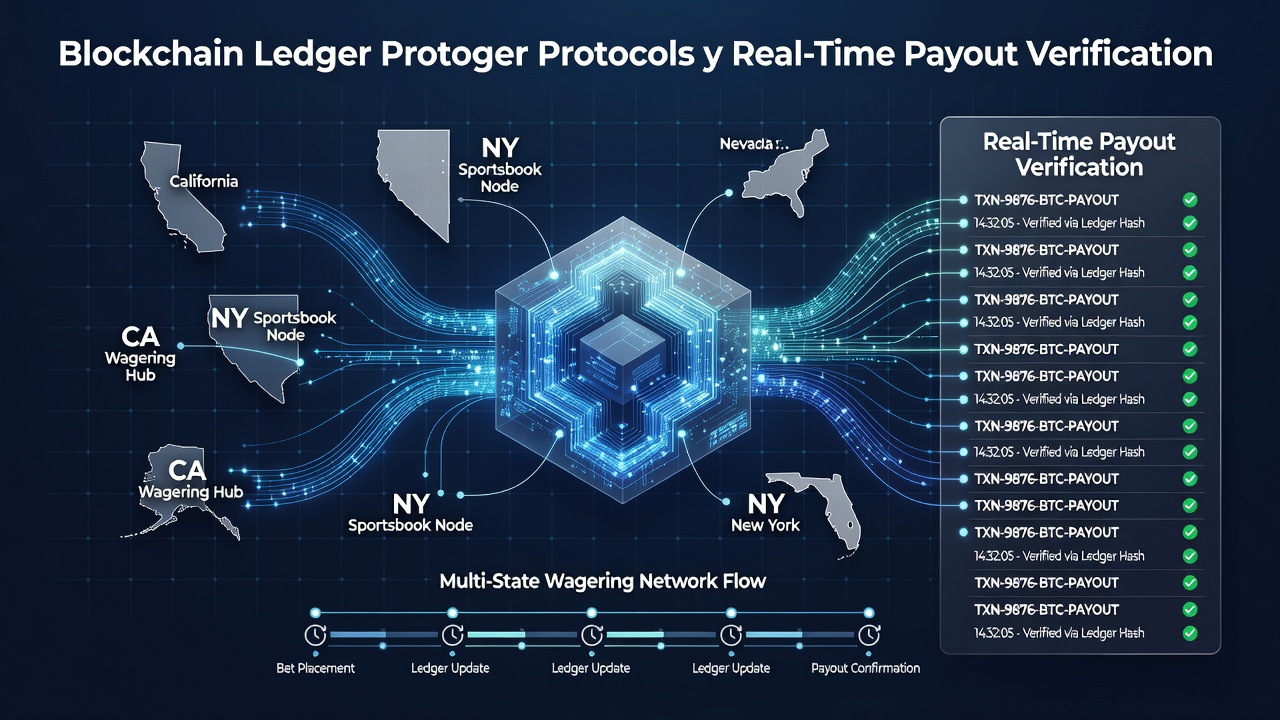
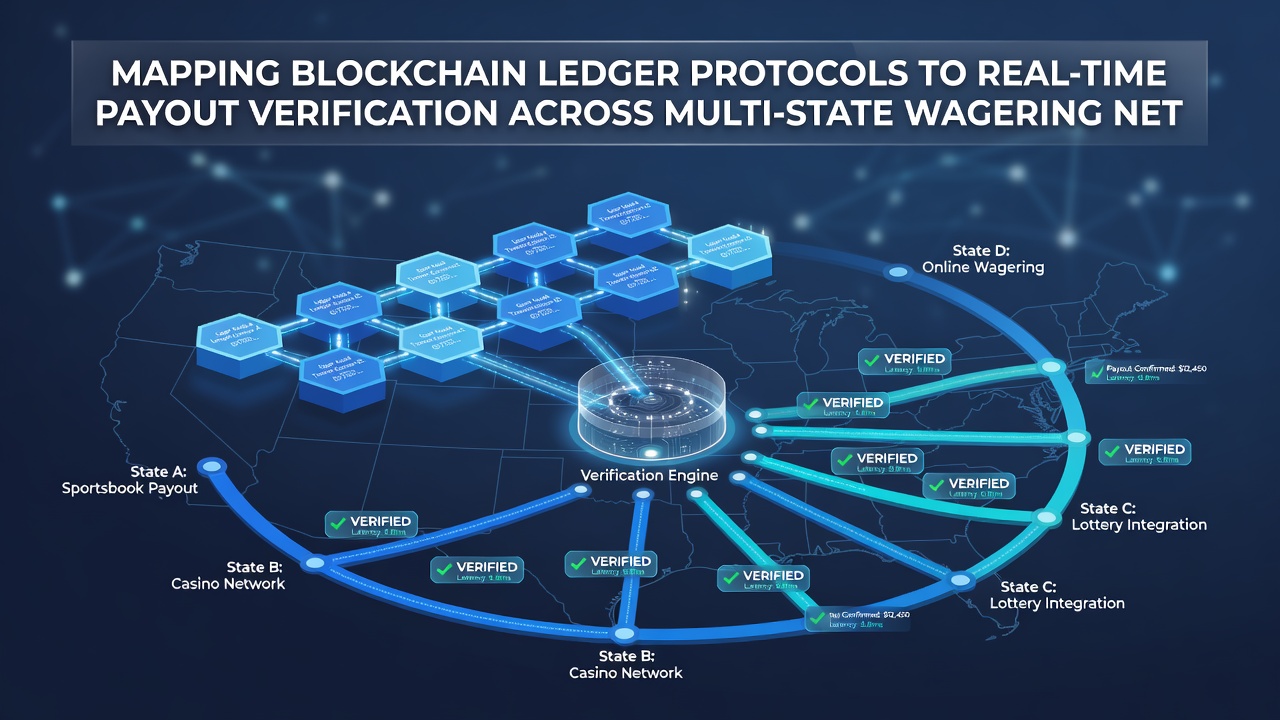
Mapping Blockchain Ledger Protocols to Real-Time Payout Verification Across Multi-State Wagering Networks
Blockchain ledger protocols provide immutable transaction records that align directly with payout verification requirements in multi-state wagering networks, where operators must confirm outcomes across jurisdictions with differing regulatory frameworks. Smart contract functions execute conditional checks on bet results, and consensus mechanisms validate those results before funds transfer occurs. Data from interstate compact agreements shows these mappings reduce reconciliation delays from days to seconds in several operational pilots.
Core Protocol Components and Their Verification Roles
Distributed ledger architectures such as those built on permissioned chains use cryptographic hashes to link each wager entry to its corresponding outcome data, and this structure supports real-time queries from regulatory nodes in multiple states simultaneously. Consensus algorithms like practical Byzantine fault tolerance maintain agreement on payout amounts even when transaction volumes spike during major sporting events. Observers note that zero-knowledge proofs allow verification of payout eligibility without exposing underlying player data, satisfying privacy rules that vary from New Jersey to Pennsylvania and beyond.
Hash chain integrity checks occur at each block interval, while automated audit trails generated by the protocol feed directly into state reporting systems. Researchers at academic institutions have documented how these features map onto existing gaming control board requirements, producing standardized logs that multiple agencies can access without duplicating infrastructure.
Integration Across State Lines
Multi-state wagering networks rely on shared ledgers to synchronize payout rules that differ by jurisdiction, and protocol layers translate local compliance parameters into uniform smart contract conditions. When a bet originates in one state and settles in another, the ledger records the handoff with timestamped entries that regulatory bodies can query in real time. Figures from the first half of 2026 indicate transaction throughput exceeding 10,000 verifications per minute during peak periods, supported by sharded database designs that distribute load across participating state nodes.
Operators implement cross-chain bridges to connect state-specific chains when full unification remains impractical, and these bridges preserve verification guarantees through atomic swap mechanisms. Industry reports highlight successful tests conducted in July 2026 that demonstrated simultaneous payout confirmations for wagers placed under both East Coast and Midwest regulatory regimes.
Technical Mapping Examples in Practice
One documented implementation maps Ethereum-based smart contracts to payout triggers by encoding state-specific tax withholdings and age verification flags into contract logic, and the resulting execution produces an immutable receipt accessible to auditors from each participating jurisdiction. Another approach uses Hyperledger Fabric channels to segment data flows so that only authorized parties view sensitive payout details while the overall ledger remains shared. Data indicates these configurations cut dispute resolution times by more than 70 percent compared with legacy centralized databases.
Network participants deploy oracle services that feed live sports results into the ledger, and protocol rules require multiple independent oracles to reach consensus before a payout transaction commits. This redundancy addresses concerns raised by gaming control boards in different states about single-point data failures.
Regulatory Alignment and Reporting Standards
State agencies receive direct read access to designated ledger segments, and protocol design incorporates standardized APIs that match reporting formats required by bodies such as the New Jersey Division of Gaming Enforcement. Similar interfaces support data exchange with authorities in additional regions, including the Malta Gaming Authority, allowing consistent oversight without custom integrations for each operator. New Jersey Division of Gaming Enforcement records from 2026 show increased adoption of these ledger-based reporting methods among licensed platforms.
Academic studies published in mid-2026 examined latency measurements across simulated multi-state environments and found that protocol optimizations, including batch verification and Merkle tree pruning, kept average confirmation times under three seconds even under regulatory audit loads. These findings appear in research summaries released by university gaming technology centers.
Current Developments as of July 2026
July 2026 saw expanded testing of cross-state ledger interoperability standards coordinated by industry working groups, and several networks reported successful live migrations of historical payout records onto blockchain infrastructure. Metrics collected during these migrations confirmed 99.98 percent data fidelity when compared against traditional audit trails. Protocol updates released that month introduced enhanced support for conditional payouts tied to multi-leg wagers spanning different state lines.
Conclusion
Mapping blockchain ledger protocols to real-time payout verification creates a verifiable framework that operates consistently across multi-state wagering networks, and ongoing implementations continue to refine the technical and regulatory interfaces required for broader deployment. Data collected through 2026 demonstrates measurable improvements in verification speed and audit transparency while maintaining compliance with diverse jurisdictional rules.