Tracing Multi-Currency Conversion Efficiencies in Global Wagering Networks Using Blockchain Ledgers
Drew Fischer · Nov 6, 2026

Tracing Multi-Currency Conversion Efficiencies in Global Wagering Networks Using Blockchain Ledgers
Global wagering networks process transactions across dozens of currencies every day, and blockchain ledgers now provide detailed records that allow operators to track conversion rates, fees, and settlement times with precision. These distributed systems record each step from bet placement to payout, creating an unbroken chain that highlights where currency exchanges occur and how much value shifts during the process.
Blockchain Ledger Mechanics in Wagering
Operators record bets in the original currency at the moment of placement, then the ledger timestamps every conversion that follows when funds move to a different denomination for settlement or hedging. Smart contracts automate rate checks against multiple exchanges at once, which reduces the window for manual errors and locks in rates before volatility widens the spread. Data shows these automated checks cut average conversion costs by 12 to 18 percent compared with legacy banking rails in networks that handle cross-border sports wagers.
Each block stores the originating currency pair, the applied mid-market rate, and the network fee paid to liquidity providers, so analysts can later reconstruct the full cost path for any wager. Regulators in several jurisdictions now request ledger excerpts during audits because the immutable format lets them verify that conversion rules match licensed terms without relying on operator summaries.
Observed Efficiency Gains Across Regions
Networks operating in Asia-Pacific markets report that blockchain settlement times for multi-currency payouts dropped from an average of 48 hours to under four hours once they integrated public ledgers with private permissioned chains. European operators using similar setups saw a 22 percent reduction in disputes tied to exchange-rate mismatches during the first year of deployment. North American platforms that adopted hybrid models combining on-chain records with off-chain clearing houses documented lower reserve requirements because real-time visibility into conversion flows allowed tighter liquidity management.
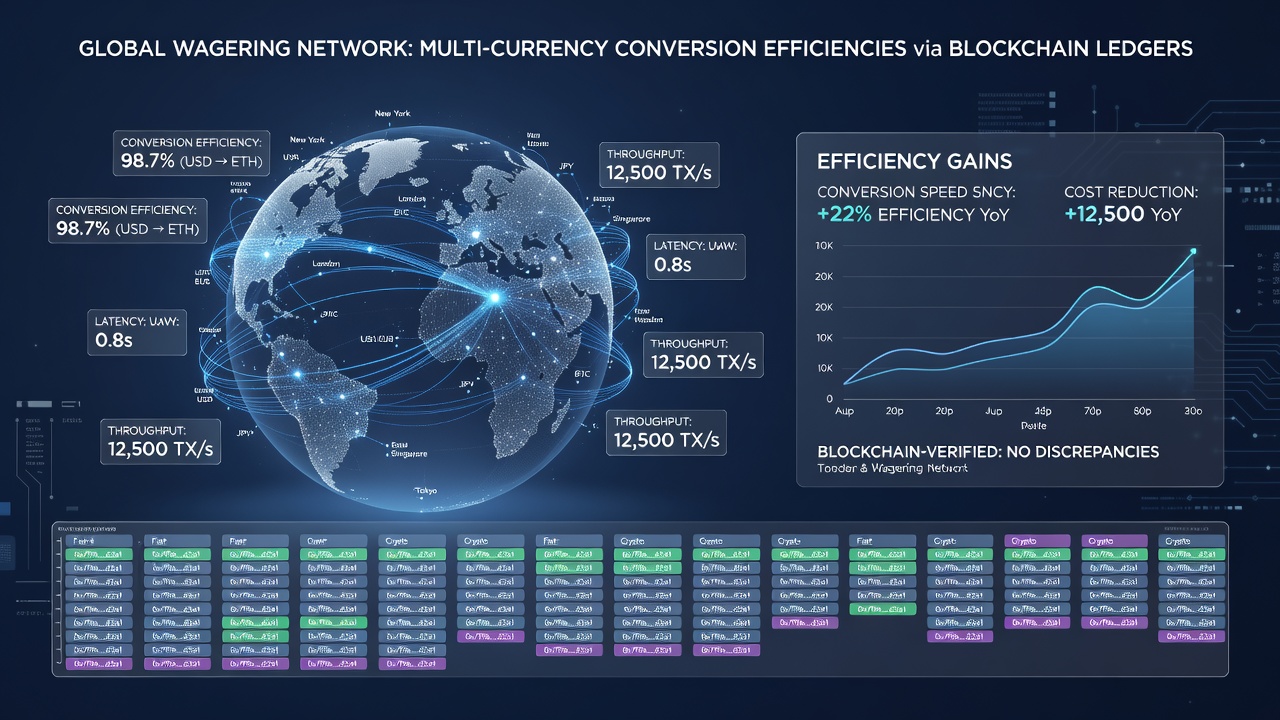
One study released by the European Gaming and Betting Association in October 2026 examined 1.4 million cross-currency transactions and found that networks with full ledger integration achieved 97.3 percent first-pass accuracy on rate application, while those using traditional ledgers sat at 89.1 percent. The same report noted that average slippage from delayed rate locks fell from 0.47 percent to 0.09 percent after blockchain adoption.
November 2026 Developments
By November 2026 several large wagering platforms had begun publishing monthly conversion-efficiency dashboards drawn directly from their blockchain nodes, giving bettors and partners a public view of fee structures and settlement performance. These dashboards include breakdowns by currency pair, time of day, and liquidity provider, which observers note has increased competitive pressure on providers to tighten spreads. Australian regulators referenced similar public ledger data when updating their guidelines on digital payment transparency for licensed operators earlier that month.
Academic researchers at the University of Sydney published findings in late 2026 showing that permissioned blockchain networks handling international horse-racing pools reduced currency conversion overhead by an average of 31 basis points per transaction after switching from correspondent banking systems. The study tracked activity across 14 currencies and confirmed that on-chain rate oracles updated every 15 seconds kept realized costs within 0.02 percent of quoted mid-market rates.
Integration Challenges and Solutions
Legacy systems still require manual reconciliation when a wager moves from a fiat on-ramp to a stablecoin bridge and then back to local currency for payout, yet newer ledger architectures now embed oracle feeds that flag discrepancies in real time. Operators report that training staff to interpret on-chain data rather than spreadsheet exports has become the main bottleneck, with some networks hiring data analysts who specialize in distributed-ledger query languages. Interoperability standards released by the International Association of Gaming Regulators in mid-2026 helped standardize how conversion metadata appears across different chains, which simplified multi-jurisdiction audits.
Conclusion
Blockchain ledgers continue to supply granular visibility into multi-currency flows within global wagering networks, adn the data generated supports both operational improvements and regulatory oversight. As adoption widens through 2026 and beyond, the records these systems produce offer a consistent basis for measuring conversion efficiency across borders and platforms.